1/12/2026
Your law firm’s website is no longer read only by people and Google, it’s now interpreted, summarized, and recommended by AI systems like ChatGPT
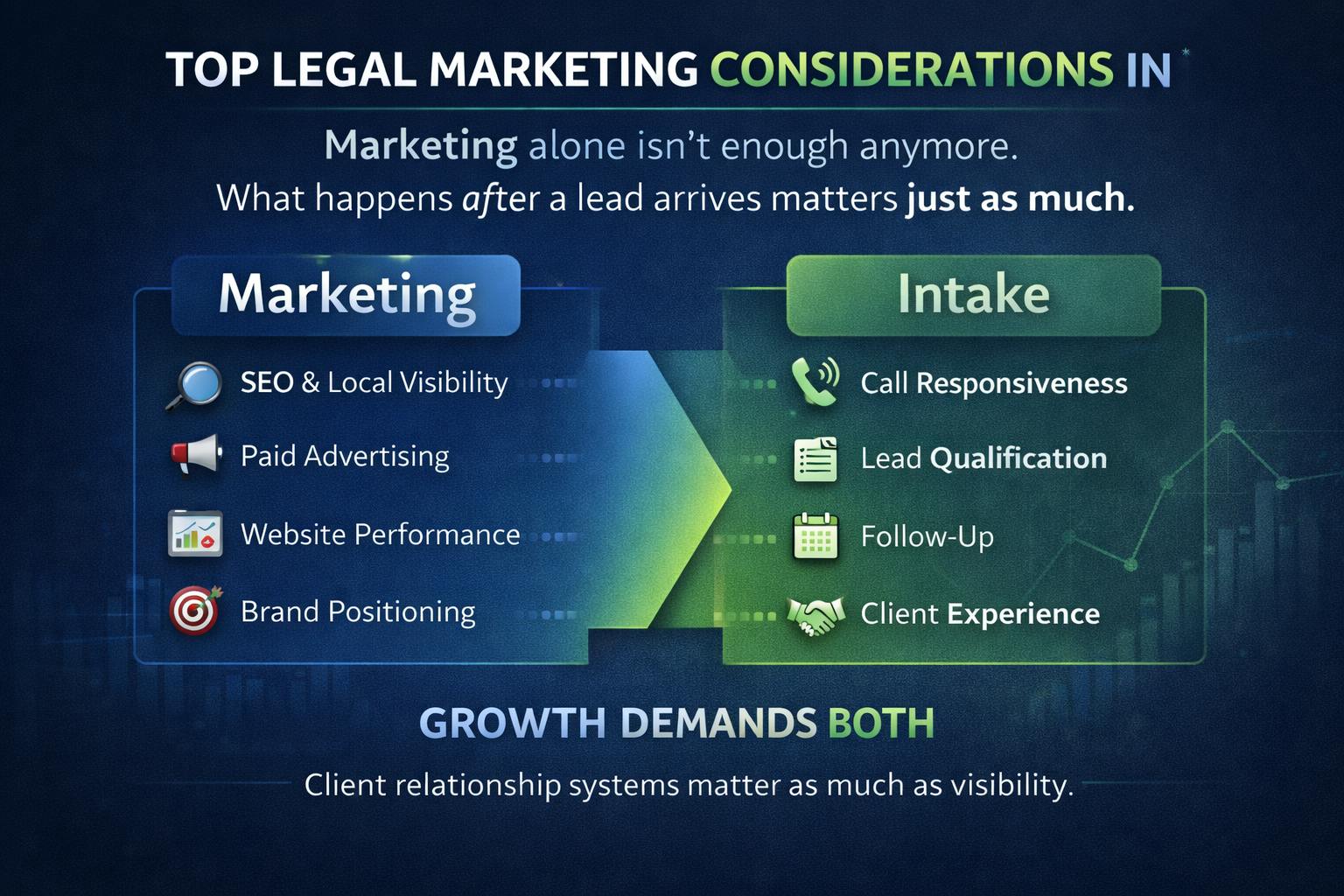
For years, law firm websites were built almost entirely around one goal: ranking on Google. Keywords, backlinks, and local SEO determined visibility.
That model is changing.
Today, potential clients increasingly ask AI tools questions like:
Large Language Models (LLMs) like ChatGPT don’t return a list of links. They synthesize answers, often mentioning specific firms, explanations, or recommendations.
That means your website isn’t just being crawled. It’s being understood, summarized, and compared.
This is where Generative Engine Optimization (GEO) comes in.
ChatGPT doesn’t browse the web like a human, and it doesn’t rank pages the same way Google does.
Instead, it:
Think of your website less as a brochure and more as a knowledge source.
If your site clearly explains:
it becomes far more likely to influence AI-generated answers.
AI systems perform better when your site is easy to interpret structurally.
Best practices include:
Avoid:
AI prefers explicit clarity over clever design.
Schema markup is no longer just an SEO tactic. It helps machines understand what your content represents.
Useful structured data for law firms includes:
This makes it easier for AI systems to confidently associate your firm with specific legal services and geographies.
AI systems prioritize reliable sources.
That means:
A slow or poorly structured site is not just bad for users, it’s less likely to be surfaced by AI-generated answers.
Precision matters in law, but clarity matters more in AI interpretation.
LLMs perform best when content:
A good test:
Could a non-lawyer summarize this page after reading it once?
If not, AI systems may struggle too.
Traditional SEO focused on keywords. LLM optimization focuses on questions and intent.
Strong examples include:
Pages that directly answer these questions, clearly and completely, are far more likely to influence AI-generated responses.
FAQ-style sections, guides, and explanatory posts perform especially well.
For solo and small firms, local relevance is a major advantage.
AI systems look for:
Instead of generic content, explain:
This helps AI connect your firm to geographically relevant queries.
LLMs look for consistency across:
If your firm’s name, services, tone, and positioning are inconsistent, AI systems have a harder time confidently referencing you.
Consistency doesn’t mean repetition, it means coherence.
AI systems increasingly surface firms that appear responsive, helpful, and client-centered.
Content that signals this includes:
This is where operational signals matter.
A firm that clearly explains how clients can reach them, what happens next, and how communication works is easier for AI to recommend than one that feels opaque or outdated.
The goal is no longer just to rank.
The goal is to be understandable, trustworthy, and referenceable by AI systems.
That requires:
Firms that adapt early will compound visibility as AI-powered search becomes the default.
At Clerx, we see this shift every day.
AI search engines don’t just evaluate what your website says, they evaluate how well your firm communicates, responds, and supports potential clients.
That’s why Clerx focuses on:
These tools don’t just improve operations. They reinforce the signals AI systems care about: responsiveness, clarity, and reliability.
If you want to ensure your firm is visible not just on Google, but inside AI-generated answers, modernizing both your website and your intake experience matters.
3/13/2026
A good intake call helps a law firm build trust fast, qualify the matter accurately, and move the right potential clients to the next step.
3/1/2026
Many law firms know they should be posting on social media, but few know what to post consistently. A simple six pillar framework can turn social media from a time drain into a reliable source of credibility and client inquiries.
We use cookies to ensure you get the best experience on our website. For more information, please see our Privacy Policy.
