1/7/2026
A practical overview of well-known legal marketing companies law firms often evaluate in 2026, plus guidance on how to choose the right partner for your firm.
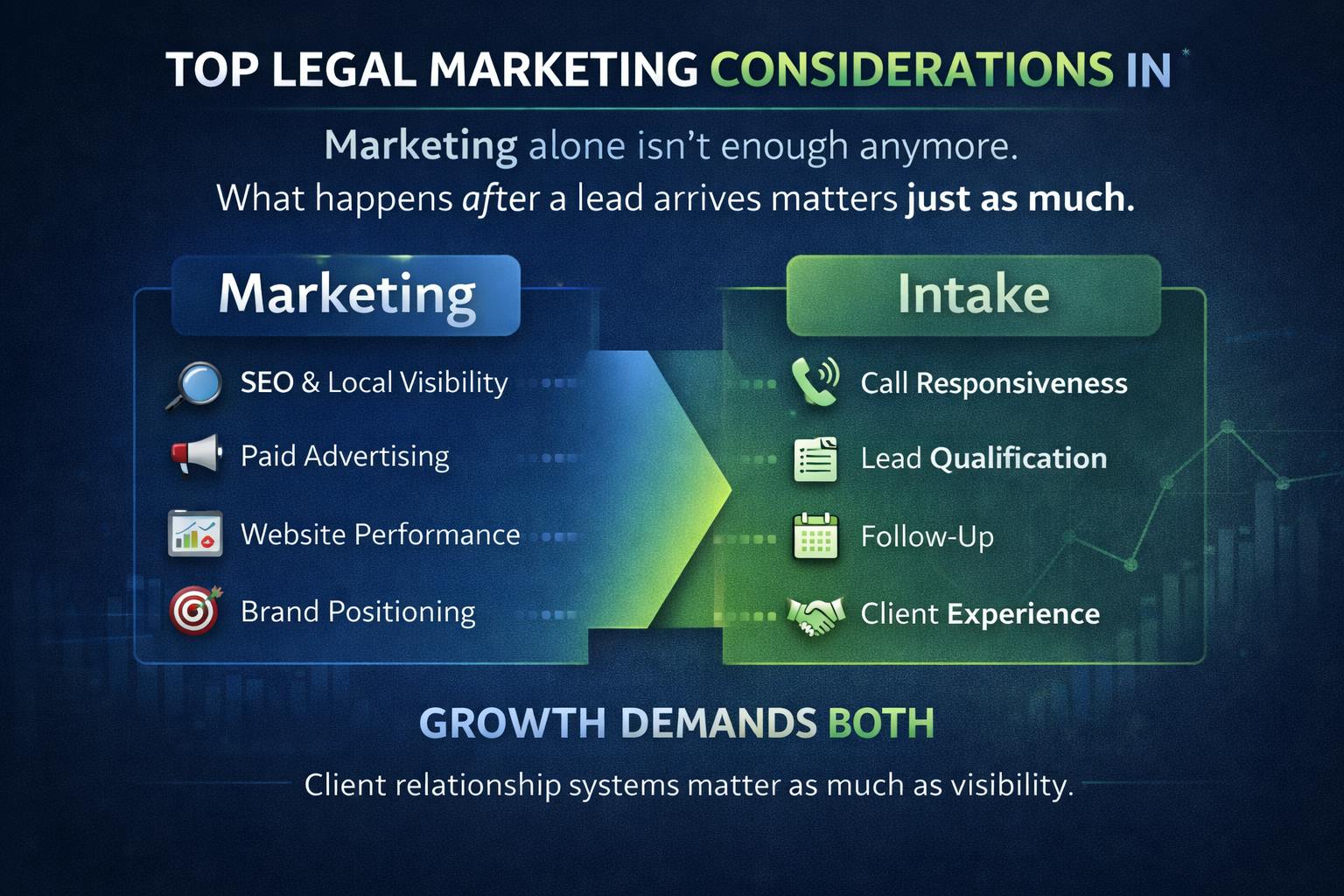
Legal marketing in 2026 is more competitive and more complex than it has ever been. Search behavior has changed, ad costs are higher, and law firms are under more pressure to convert interest into real client relationships instead of just generating traffic. That is why many firms now work with specialized legal marketing agencies that understand attorney advertising rules, local search, intake friction, and the difference between visibility and actual signed matters. Clerx’s own content reflects this same shift from “more traffic” to “better conversion,” especially in Legal Marketing in 2026: Why Visibility Alone No Longer Wins Clients, The Law Firm Marketing Funnel: How to Turn More Leads Into Clients, and Mastering Owned Media for Law Firms in 2026.
There is no single best marketing company for every law firm. The right choice depends on practice area, geography, growth goals, budget, and internal capacity. But in 2026, the firms that choose well tend to think about marketing more holistically. They are not only asking who can get them found. They are asking who can help them build a cleaner path from search to call to consultation to retained client. That broader client-journey framing also shows up across Clerx posts like Why Better Client Communication Is the Real Driver of Legal Tech Adoption, Why Better Client Communication Is One of the Most Overlooked Growth Levers for Law Firms, and How Small and Midsize Law Firms Can Balance Lead Generation and Operational Efficiency for Sustainable Growth.
General digital marketing is not always enough for law firms. Legal marketing has its own realities: strict advertising rules, practice-area nuance, local competition, review sensitivity, intake friction, and clients who often choose quickly under stress. A firm may need help with SEO, Google Business Profile optimization, paid search, website structure, local maps visibility, or content that reflects how real clients search for legal help. This same need for tighter visibility-to-conversion alignment is why Clerx publishes practical pieces like The Essential Guide to Google Business Profiles for Law Firms, How ChatGPT and AI Search Engines Understand Your Law Firm’s Website (And How to Optimize), and Most Law Firms Do Not Have a Lead Problem. They Have a Conversion Problem..
The names below come from the market landscape described in your draft and are presented as examples law firms commonly research, not recommendations.
On The Map Marketing is often discussed by firms interested in local SEO, technical website optimization, and geographic visibility. Firms considering this kind of partner are usually trying to improve local rankings, site structure, and foundational digital performance. That makes sense because local presence is still one of the strongest drivers of high-intent inbound demand, especially when paired with a stronger intake response after the click or call. Relevant Clerx context includes The Essential Guide to Google Business Profiles for Law Firms, Mastering Owned Media for Law Firms in 2026, and Legal Marketing in 2026: Why Visibility Alone No Longer Wins Clients.
Rankings.io is frequently associated with aggressive SEO and search positioning for highly competitive legal keywords. Firms exploring this type of agency are usually focused on organic growth, technical SEO, and winning more of the search market in crowded practice areas. But visibility alone is rarely enough without stronger intake and conversion, which is why this topic connects naturally to The Law Firm Marketing Funnel: How to Turn More Leads Into Clients, Why Intake Is More Than a Phone Function: It Is a Law Firm Growth System, and The Hidden Cost of Missed Calls: How Law Firms Lose Revenue Before Intake Even Begins.
Scorpion is commonly considered by firms looking for a centralized platform approach that combines websites, paid search, analytics, and broader marketing infrastructure. That can appeal to firms that want one partner managing multiple moving parts. But firms still need to ask the same question: what happens after the lead arrives? That is exactly where Clerx’s intake-focused content becomes relevant, including How AI Intake Helps Law Firms Scale Without Adding Overhead, Why AI Intake Is the New Standard for High-Performing Law Firms, and Why AI Operations Layers Are Becoming Essential for Law Firms in 2025.
Elite Legal Marketing is often positioned around tailored SEO, PPC, website design, and branding for law firms that want a more customized approach. That type of partner can be attractive to firms that want closer alignment between marketing strategy and brand voice. Still, the strongest brand in the world underperforms if intake is weak, which is why it helps to read this alongside Why Better Client Communication Is One of the Biggest Growth Levers for Law Firms, The Hidden Cost of Poor Communication for Small & Midsize Law Firms, and Why Client Perception Doesn’t Match Lawyer Intention - And What AI Can Do About It.
Grow Law is often evaluated by firms that care about performance tracking, transparency, and ongoing optimization. That mindset is important because legal marketing works best when firms can connect effort to booked consultations and retained matters, not just impressions or clicks. This same measurement mindset is reflected in How Small and Midsize Law Firms Can Balance Lead Generation and Operational Efficiency for Sustainable Growth, Most Law Firms Do Not Have a Lead Problem. They Have a Conversion Problem., and Systems Make the Firm. Not Hustle..
Comrade Digital Marketing is often discussed as a full-service option that blends branding, website development, SEO, and paid advertising. Firms considering this type of partner usually want a more cohesive digital presence. That can be valuable, but the real leverage still comes when visibility connects cleanly to intake, follow-up, and conversion, which is the same point made in Why Better Client Communication Is One of the Most Overlooked Growth Levers for Law Firms, The Law Firm Marketing Funnel: How to Turn More Leads Into Clients, and The Hidden Cost of Disorganized Intake.
Hennessey Digital is often associated with branding, creative positioning, and search visibility for competitive legal markets. Firms exploring this type of agency are usually trying to stand out in crowded categories. But differentiation only helps if the firm is responsive after someone reaches out, which is why the communication side still matters so much in Why Better Client Communication Is the Real Driver of Legal Tech Adoption, The After-Hours Gap: Why Law Firms Lose Clients After 5 PM (and How to Fix It), and Why More Law Firms Are Upgrading From Virtual Receptionists to AI in 2025.
MeanPug Digital is often framed as a strategic partner for SEO, paid search, content, and websites. That kind of agency relationship can be useful for firms that want long-term alignment between business goals and demand generation. But the compounding effect comes when lead flow is matched with better qualification and cleaner calendar conversion, a theme also reinforced in Stop Wasting Time: How Smart Law Firms Qualify Better Leads in 2025, Why Law Firms Get Ghosted and How to Fix It, and How AI Intake Helps Law Firms Scale Without Adding Overhead.
LegalRev is often considered by smaller and midsize law firms that want local visibility, foundational SEO, content, and reputation support. That is a logical fit for firms still building their digital foundation. For those firms, Google presence and first response often matter just as much as broader SEO, which is why The Essential Guide to Google Business Profiles for Law Firms, Mastering Owned Media for Law Firms in 2026, and The Hidden Cost of Poor Communication for Small & Midsize Law Firms are so relevant here.
Thrive is often evaluated by firms seeking multi-channel support under one roof, including SEO, PPC, social media, and website strategy. That can be useful when the firm wants breadth, but it still raises the same question every law firm should ask any agency: do you understand the full client journey from search to consultation? That is exactly why this article fits so closely with Legal Marketing in 2026: Why Visibility Alone No Longer Wins Clients, The Law Firm Marketing Funnel: How to Turn More Leads Into Clients, and Why Intake Is More Than a Phone Function: It Is a Law Firm Growth System.
Selecting a marketing agency is a strategic choice that affects not only lead volume, but also brand perception, intake pressure, and the quality of the client experience after the click. The best agencies are not necessarily the ones that claim to do everything. They are the ones whose strengths align with how your firm actually grows.
Before evaluating agencies, get clear on what the firm wants.
Is the goal stronger local visibility? Better Google Maps performance? More qualified organic traffic? Better PPC efficiency? Stronger branding? More consistent intake-to-consult conversion?
The right agency is one whose strengths match the actual objective. That same focus on clarity over noise also appears in Systems Make the Firm. Not Hustle., You’re Not Too Busy. Your System Is Too Manual., and How Small and Midsize Law Firms Can Balance Lead Generation and Operational Efficiency for Sustainable Growth.
Firms should understand what an agency is doing, how results are measured, and when performance is reviewed. Reporting, expectations, and ownership matter more than a flashy deck. That same communication discipline is at the heart of Why Better Client Communication Is the Real Driver of Legal Tech Adoption, Why Client Perception Doesn’t Match Lawyer Intention - And What AI Can Do About It, and The Hidden Cost of Poor Communication for Small & Midsize Law Firms.
Marketing does not stop at the form fill or call. Firms should evaluate whether the agency understands what happens next: intake, qualification, response time, follow-up, and consultation booking. An agency that understands the path from search to consultation will usually support more durable growth than one focused only on traffic. This is the exact bridge Clerx keeps emphasizing in The Law Firm Marketing Funnel: How to Turn More Leads Into Clients, Most Law Firms Do Not Have a Lead Problem. They Have a Conversion Problem., and Can MyCase Automate Client Communication? What Law Firms Should Automate - and What Still Needs an Intake Layer.
Clerx is not a marketing agency. It sits one step later in the growth system.
Clerx helps firms strengthen intake and communication across calls, website chat, and SMS so that the leads created by SEO, paid search, referrals, Google Business Profiles, and agency work are handled promptly and consistently. In other words, Clerx does not replace marketing. It helps firms protect the value of marketing after the lead arrives. That same role is reflected across How AI Intake Helps Law Firms Scale Without Adding Overhead, Why AI Intake Is the New Standard for High-Performing Law Firms, and The Hidden Cost of Missed Calls: How Law Firms Lose Revenue Before Intake Even Begins.
For firms that want to evaluate workflow fit first, start with 8am MyCase, then Clio, then Smokeball, followed by Lawmatics and Lawcus. Clerx’s integrations hub explains that these connections help firms streamline workflow and keep data synchronized.
The firms listed above are not ranked here and are not recommendations. This article is best used as a starting point for research, not a substitute for due diligence. Every law firm should independently evaluate fit, communication quality, reporting discipline, ownership structure, and whether the agency understands how visibility connects to real signed matters. That framing follows your uploaded draft directly.
If your firm is investing in marketing and wants to convert more of that effort into consultations and retained matters, the next step is usually not just more traffic. It is stronger intake.
Legal marketing requires practice-area nuance, sensitivity to attorney advertising rules, and a stronger understanding of how clients search and decide under stress. It also tends to rely heavily on intake quality once the lead arrives.
Usually no. SEO or PPC strength matters, but the better question is whether the agency’s strengths match the firm’s actual goal and whether they understand the client journey beyond the click.
Because marketing creates interest, but intake determines whether that interest becomes a consultation and a signed client. Weak intake makes strong marketing look weaker than it is.
Ask what they believe the firm’s biggest growth bottleneck is, how they measure success, how often they report results, how they think about conversion, and who owns critical assets like the website, domain, and Google Business Profile.
Because for many firms, local map visibility is one of the strongest sources of high-intent traffic and calls. The profile often becomes the first impression before the website. This aligns with Clerx’s Google Business Profile guidance.
Because once leads arrive, firms need intake details, follow-up activity, and scheduling data to move into the systems they already use. Clerx’s integrations page explicitly says these integrations help streamline workflow and keep data synchronized.
Start with 8am MyCase, Clio, and Smokeball, then review Lawmatics, Lawcus, and the full Clerx integrations page.
Clerx helps law firms strengthen intake and communication across calls, website chat, and SMS so the leads their agency generates are answered faster, qualified more consistently, and moved more smoothly toward consultation.
6/12/2026
Text messaging can improve speed and convenience, but only if the firm treats SMS as part of intake instead of a disconnected side channel.
6/11/2026
Website chat can improve law firm conversions, but only when it helps visitors move forward instead of adding another disconnected intake step.
We use cookies to ensure you get the best experience on our website. For more information, please see our Privacy Policy.
