6/10/2026
No-shows are rarely random, and firms that manage reminders, confirmations, and follow-up well usually see better consultation outcomes.
By Attorney Michael Brunman, Co-Founder & CEO of Clerx
A booked consultation is not the same as a completed consultation.
Many law firms treat scheduling as the finish line of intake. A prospective client reaches out, the firm answers, the person appears to be a fit, and a consultation goes on the calendar. From the firm’s perspective, the lead has moved forward.
But the process is not finished yet.
If the prospect forgets, gets confused, loses confidence, misses the reminder, does not know what to bring, or simply goes quiet, the firm still loses the opportunity. That is why no-show reduction should be treated as part of intake, not as a separate scheduling problem.
A strong intake process does not only help firms book consultations. It helps more of those consultations actually happen.
That is why no-show reduction belongs in the same broader conversation as Why Intake Is More Than a Phone Function: It Is a Law Firm Growth System, What Is a Good Intake Call for a Law Firm? Best Practices to Improve Client Conversion, The Complete Guide to Perfecting Law Firm Intake in 2026, and The Law Firm Marketing Funnel: How to Turn More Leads Into Clients.
No-shows are often treated as a client behavior problem.
Sometimes that is fair. People get busy. They forget. They change their minds. They may speak with another firm. They may decide not to move forward.
But many no-shows are also process problems.
Common causes include:
In other words, some no-shows happen because the firm never fully converted the scheduled lead into a committed next step.
This is also why no-show reduction connects naturally to Why Legal Consultations Don’t Get Booked: 10 Intake Leaks Between First Contact and Calendar, Why Law Firms Get Ghosted and How to Fix It, and How to Recover Leads That Didn’t Book on the First Interaction. Consultation attendance is not just about the calendar. It is about momentum, clarity, and follow-through.
The best way to reduce no-shows is not simply to send more reminders.
It starts earlier, during the intake conversation.
A strong intake process should make sure the prospect understands:
When this is clear, the appointment feels more real. When it is vague, the appointment feels easy to ignore.
That is why consultation quality is tied closely to first-response quality. If the intake conversation feels rushed, unclear, or purely transactional, the prospect may agree to a consultation without feeling truly committed.
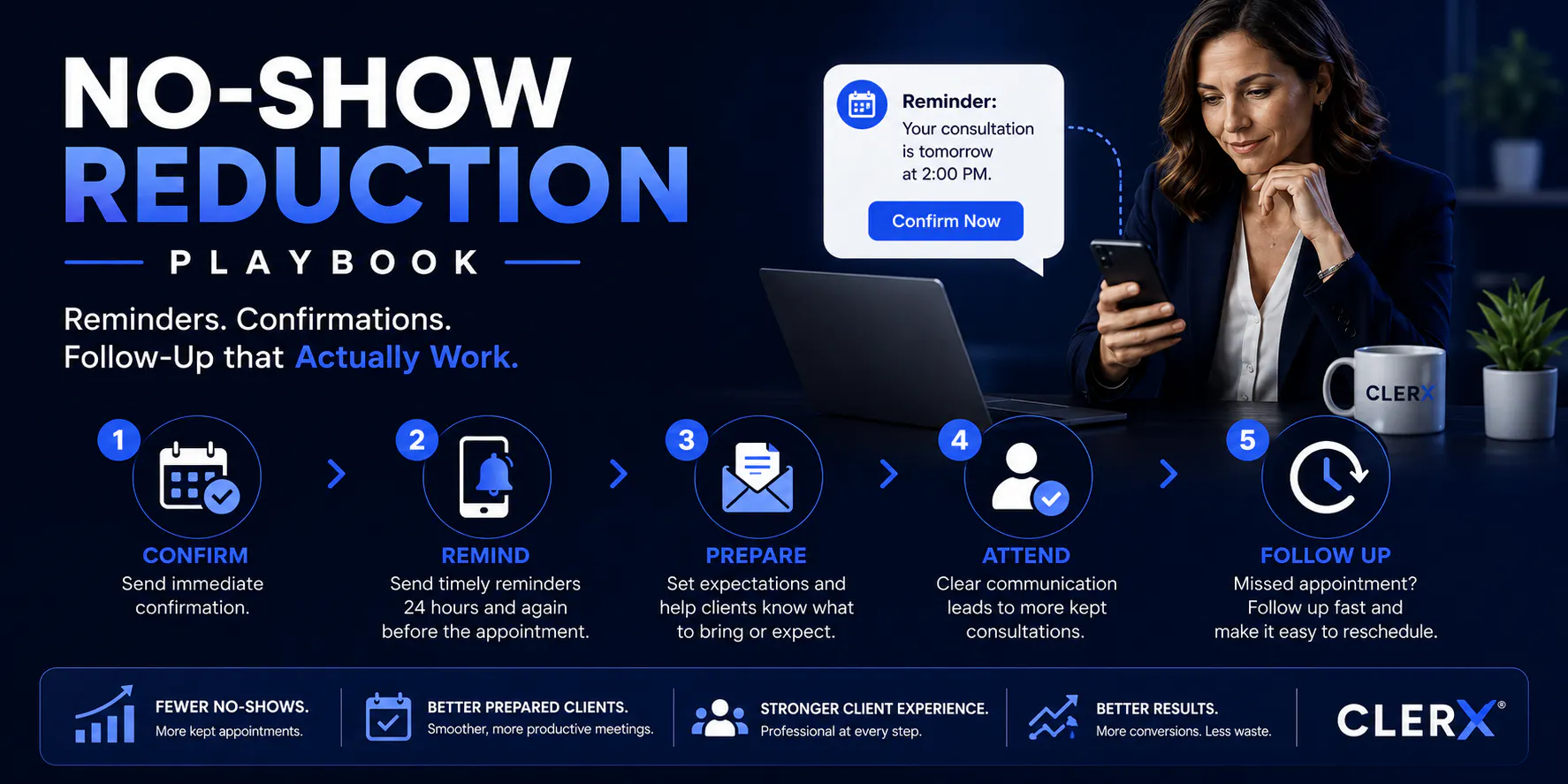
Every firm should have a reminder sequence for booked consultations.
A practical starting point is:
The exact cadence can vary by practice area, urgency, and consultation type. But the principle is consistent: the firm should not rely on the prospect remembering without help.
The reminder should also do more than state the date and time. It should confirm the logistics and make the next step easy.
A strong reminder may include:
This is where intake, scheduling, and follow-up become one workflow.
Many firms think reminders are only about memory. But in legal services, reminders also reduce uncertainty.
A prospective client may miss a consultation because they are anxious, embarrassed, unsure what will happen, or worried about cost. This is especially common in consumer-facing areas like family law, immigration, bankruptcy, criminal defense, personal injury, and estate planning.
A reminder can help by making the next step feel manageable.
Instead of sending a cold message that only says, “Reminder: consultation tomorrow,” firms should use reminders to clarify and reassure.
For example:
That kind of clarity helps the prospect feel less friction around showing up.
The best reminder channel depends on how the prospect engaged with the firm.
Phone, text, and email can all work, but they should not be random.
Text is often effective for short confirmations and day-of reminders. Email is useful when the firm needs to include preparation instructions, documents, links, or detailed logistics. Phone may make sense for high-value matters, urgent inquiries, or prospects who seemed uncertain during intake.
What matters most is that reminders are owned, consistent, and connected to the intake workflow.
This is the same systems problem discussed in Practice Management Software vs Intake Software: What Each Should Actually Handle, Can MyCase Automate Client Communication? What Law Firms Should Automate - and What Still Needs an Intake Layer, The Intake Layer: How Lawcus Users Turn More Leads Into Matters, and The Intake Layer: How Filevine Users Turn More Leads Into Matters. The reminder is only useful if it is part of a connected process.
A no-show should not automatically mean the lead is dead.
The firm should have a clear no-show recovery workflow.
That might include:
The tone matters. A no-show follow-up should not sound annoyed. It should sound helpful and direct.
For example:
“We missed you for your consultation today. We understand schedules change. If you would still like to speak with the firm, you can reply here and we can help find another time.”
That message makes it easy to recover the lead without creating defensiveness.
This is where no-show reduction overlaps with lead recovery. A missed consultation is often just another moment where the firm needs a structured second chance.
If a firm only tracks total no-shows, it misses the most useful insight.
A better intake dashboard should track no-shows by:
This makes the data actionable.
For example, if paid leads no-show more often than referral leads, the issue may be lead quality, message fit, or consultation framing. If after-hours leads book but do not show, the firm may need stronger next-day confirmation. If text-confirmed consultations show up more often than email-only consultations, the firm should adjust its reminder workflow.
This is why no-show metrics belong in the same measurement discipline as Law Firm Intake Metrics That Actually Matter: The Dashboard Every Managing Partner Should Review, Economic Resilience Starts With Your Phone: Turning Intake Into a Profit Engine, and Legal Marketing in 2026: Why Visibility Alone No Longer Wins Clients.
Some firms hesitate to send multiple reminders because they do not want to seem aggressive.
That is understandable, but a well-written reminder does not feel pushy. It feels helpful.
The key is to keep reminders:
The purpose is not pressure. The purpose is clarity.
Most clients appreciate knowing where to go, when to show up, what to expect, and how to reschedule if needed.
No-show reduction can be structured and partly automated, but human judgment still matters.
Human review is especially important when:
Automation can help make sure no one falls through the cracks. Humans should still guide sensitive judgment calls.
Clerx helps law firms strengthen intake and communication across calls, website chat, and SMS so more leads move from first contact to completed consultation.
Donna can help firms respond faster, support scheduling, send structured follow-up, and reduce the manual gaps that often lead to no-shows or missed second chances.
If you want to see how this could work inside your firm using your current systems, book a short demo here.
Legal consultations often no-show because the prospect forgets, feels uncertain, does not understand the next step, receives weak reminders, has unresolved concerns, or does not feel fully committed after intake.
A practical starting point is an immediate confirmation, a 24-hour reminder, and a same-day reminder. Some firms may also add a short confirmation request depending on practice area and consultation type.
It should include the date, time, meeting format or location, what to prepare, how to reschedule, and a clear way to confirm or ask questions.
The firm should send a helpful same-day follow-up, offer an easy rescheduling path, and decide whether to make one or two additional attempts depending on lead quality and urgency.
Track consultation show rate, no-show rate by source and channel, confirmation rate, reminder completion, reschedule rate, and how many missed consultations eventually become clients.
Attorney Michael Brunman, is the Co-Founder and CEO of Clerx. He is a former commercial and intellectual property litigator, Harvard MBA ’23, former PayPal product manager, and former McKinsey consultant. At Clerx, he helps law firms use AI agents to improve client intake, reduce missed calls, and streamline client communication.
6/12/2026
Text messaging can improve speed and convenience, but only if the firm treats SMS as part of intake instead of a disconnected side channel.
6/11/2026
Website chat can improve law firm conversions, but only when it helps visitors move forward instead of adding another disconnected intake step.
We use cookies to ensure you get the best experience on our website. For more information, please see our Privacy Policy.
